
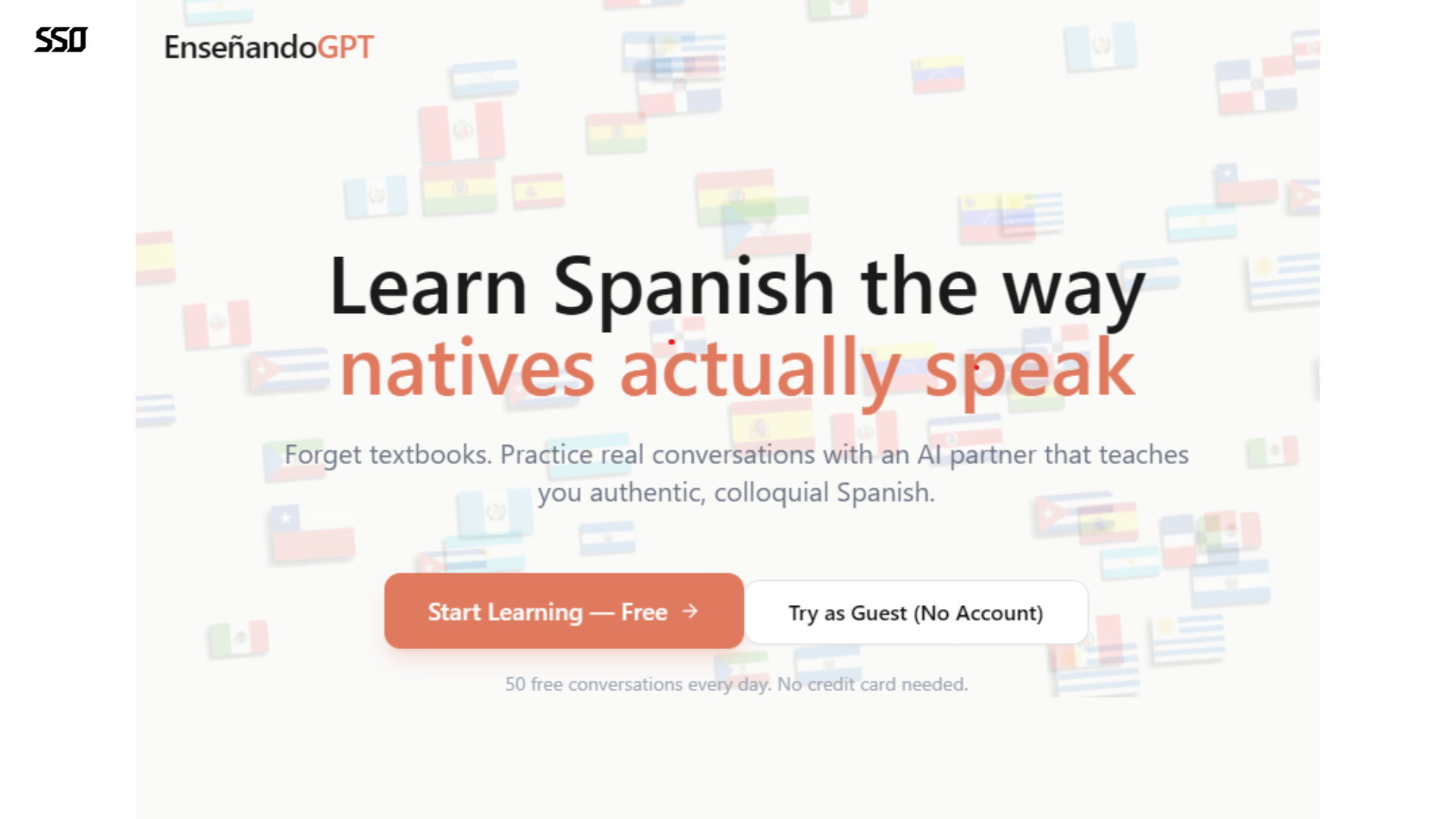

In the crowded landscape of language-learning technology, most platforms still adhere to a familiar paradigm: vocabulary drills, gamified quizzes, flashcard repetition, and scripted dialogues engineered for predictability rather than authenticity. While such methods can produce measurable progress on standardized metrics, they often fail to cultivate the spontaneous, adaptive fluency required for real-world communication. EnseñandoGPT emerges as a deliberate departure from this model. Instead of presenting Spanish as a curriculum to be completed, it offers an intelligent conversational environment designed to approximate the experience of interacting with a native speaker.
Developed by Jayden Reo and powered by proprietary AI linguistic models from SSO Artists Entertainment, the platform reframes language learning as an ongoing process of participation rather than a sequence of lessons. Available both through a web interface and a native mobile application, EnseñandoGPT seeks to reduce structural barriers that have historically limited access to high-quality language instruction, including cost, geographic constraints, scheduling inflexibility, and social anxiety.
Learning Through Conversation, Not Memorization
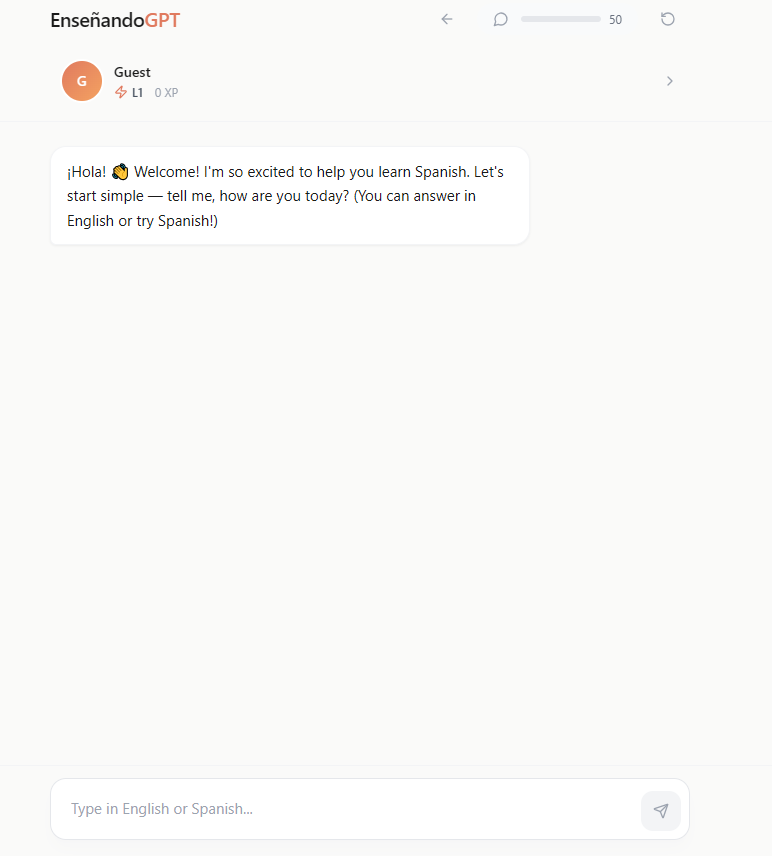
At the core of EnseñandoGPT lies a pedagogical premise supported by decades of research in applied linguistics: language competence emerges most robustly through meaningful use in context. Rather than isolating vocabulary items or grammar rules, the system embeds linguistic forms within coherent exchanges that resemble everyday communication. Users are encouraged to ask questions, express opinions, narrate experiences, and explore topics organically, receiving responses in natural, idiomatic Spanish.
This approach contrasts sharply with traditional methods that prioritize explicit rule acquisition before communicative practice. By introducing structures implicitly through use, the platform aligns with communicative language teaching and usage-based theories, which emphasize that fluency develops from exposure to authentic input coupled with opportunities for output. Learners encounter language not as abstract knowledge but as a tool for accomplishing goals within interaction.
Furthermore, the AI’s ability to sustain extended dialogue allows for thematic continuity, enabling learners to revisit topics, refine expressions, and build discourse-level competence. Such skills are rarely addressed in conventional exercises, which often fragment language into isolated sentences devoid of pragmatic context.
An Adaptive AI Language Partner
EnseñandoGPT intentionally positions its system as a conversational partner rather than a didactic instructor. This distinction is not merely rhetorical. A partner participates, negotiates meaning, and adapts dynamically to the user’s communicative intent. The AI monitors lexical choice, syntactic complexity, and discourse patterns, adjusting its responses to maintain comprehensibility while gradually introducing more sophisticated forms.
Key functional capabilities include natural dialogue generation, contextual memory across turns, real-time feedback embedded within responses, and the ability to shift registers from informal colloquial speech to more formal usage when appropriate. By mirroring how native speakers modulate language in response to their interlocutor, the system exposes learners to pragmatic norms that are difficult to convey through static materials.
This adaptive interaction effectively creates a personalized immersion environment. Unlike human tutors, however, the AI is continuously available, nonjudgmental, and capable of infinite patience, attributes that can significantly reduce the affective barriers that impede language use.
Accessibility and Barrier Reduction
A defining feature of EnseñandoGPT is its commitment to accessibility. The platform permits immediate engagement without mandatory account creation, allowing users to begin practicing as guests. This design choice eliminates friction at the entry point and acknowledges that even minor obstacles can deter potential learners, particularly those with limited digital literacy or distrust of data collection practices.
The broader mission emphasizes universal availability of language education, positioning the tool as a resource for diverse populations including students, immigrants, professionals seeking bilingual competence, and lifelong learners pursuing personal enrichment. By offering the service free of charge and avoiding subscription gating, the platform challenges the prevailing economic model of educational technology, which often monetizes progression through tiered access.
Accessibility in this context is not limited to cost. It also encompasses temporal flexibility, device compatibility, and psychological safety. Users can practice privately at any hour, repeat interactions without embarrassment, and experiment with language without fear of social judgment.
Daily Practice and Skill Consolidation
Language acquisition depends critically on sustained exposure and repeated use. EnseñandoGPT encourages habitual engagement by framing practice as an open-ended conversation rather than a discrete lesson to be completed. Users can return to ongoing dialogues, initiate new topics, or explore hypothetical scenarios, maintaining continuity in their learning trajectory.
The AI’s capacity to introduce novel vocabulary organically while reinforcing previously encountered forms mirrors naturalistic acquisition processes observed in immersion settings. Because feedback occurs within context, learners can integrate corrections immediately into subsequent utterances, promoting retention through meaningful repetition.
This model also supports the development of automaticity, the ability to produce language rapidly without conscious deliberation. Automaticity is a hallmark of fluent speakers and arises from extensive practice in communicative conditions rather than isolated study.
Alignment with AP, IB, and LOTE / FLACS Language Standards

EnseñandoGPT’s conversational design aligns closely with the communicative competencies emphasized in Advanced Placement (AP), International Baccalaureate (IB), and U.S. state World Language standards such as LOTE (Languages Other Than English) and New York’s FLACS (World Languages Standards). Rather than focusing on isolated grammar instruction, these frameworks prioritize interpretive, interpersonal, and presentational communication skills in authentic contexts. The platform’s dialogue-driven methodology directly supports the development of those competencies through sustained, meaningful interaction.
Within the AP Spanish Language and Culture framework, success depends on the ability to understand spoken and written Spanish, engage in spontaneous conversation, and express ideas with cultural awareness. EnseñandoGPT provides continuous opportunities for interpersonal communication by simulating unscripted exchanges, allowing learners to practice negotiating meaning, asking follow-up questions, clarifying misunderstandings, and sustaining discourse. Because responses are generated dynamically, users encounter a wide range of topics and registers similar to those found in AP listening and speaking tasks.
The International Baccalaureate language programs, including Language B and Ab Initio courses, emphasize communicative competence, intercultural understanding, and the ability to use language for real purposes across themes such as identity, experiences, human ingenuity, and social organization. EnseñandoGPT’s open-ended conversational structure allows learners to explore precisely these thematic domains without being confined to predetermined lesson sequences. The system’s ability to adjust complexity supports differentiated practice suitable for both standard and higher-level coursework, reinforcing vocabulary breadth, grammatical range, and discourse organization expected in IB assessments.
At the state level, LOTE and FLACS standards define proficiency in terms of real-world communication tasks across interpretive, interpersonal, and presentational modes. EnseñandoGPT most strongly reinforces the interpersonal mode, which research identifies as the most difficult to practice outside authentic settings. By providing a private environment for spontaneous dialogue, the platform enables students to rehearse conversational skills required for classroom participation, oral exams, and proficiency benchmarks without social pressure. Indirectly, it also supports interpretive skills through exposure to natural input and presentational skills by encouraging users to articulate extended responses and narratives.
Additionally, the platform’s emphasis on practical fluency, cultural nuance, and idiomatic usage mirrors the proficiency-oriented approach increasingly adopted in U.S. world language education, including ACTFL guidelines that underpin many state standards. Learners develop not only linguistic accuracy but also the ability to communicate meaning effectively, which is the central criterion across AP, IB, and FLACS evaluation rubrics.
In this way, EnseñandoGPT can function as a supplemental practice environment that bridges formal coursework and real-world communication. Students preparing for AP or IB examinations, fulfilling LOTE graduation requirements, or pursuing Seal of Biliteracy credentials may benefit from consistent conversational exposure that traditional homework formats rarely provide. By simulating authentic interaction on demand, the platform supports the transition from classroom knowledge to functional proficiency.
Intelligent Corrections Without Disruption
Effective feedback must balance accuracy with communicative flow. Excessive interruption can inhibit expression, while insufficient guidance permits errors to become entrenched. EnseñandoGPT addresses this tension by embedding corrections subtly within its responses. For example, the AI may reformulate a user’s sentence using more natural phrasing while continuing the conversation, allowing learners to notice the difference without experiencing explicit correction as criticism.
This technique aligns with interactionist theories emphasizing negotiation of meaning and recasts as mechanisms for language development. By maintaining conversational momentum, the platform preserves user confidence while still providing informative input.
Privacy and Ethical Considerations
In an era of increasing concern about data exploitation and algorithmic opacity, EnseñandoGPT foregrounds confidentiality as a core principle. The system discloses its use of artificial intelligence and provides accompanying documentation regarding data handling practices. Minimal onboarding requirements reduce the amount of personal information collected, reinforcing trust.
Ethical deployment is particularly significant in educational contexts, where vulnerable populations may rely on technology for advancement. By prioritizing privacy alongside accessibility, the platform attempts to reconcile innovation with responsibility.
A Shift Toward Practical Fluency
Taken together, these design elements reflect a broader transformation in language education from content transmission to experiential engagement. EnseñandoGPT treats language as a living system to be inhabited rather than a subject to be mastered. By simulating interactive conditions through AI, it approximates immersion without requiring travel, formal enrollment, or financial investment.
If such systems continue to improve, they may fundamentally alter expectations about how languages are learned, shifting emphasis from institutional instruction to individualized, technology-mediated practice.
Insider Trends
As artificial intelligence reshapes industries from finance to healthcare, education has become a focal point for disruption. EnseñandoGPT exemplifies this trend by applying conversational AI to one of the most enduring challenges in adult learning: acquiring functional fluency in a second language.
Developed by entrepreneur Jayden Reo and supported by SSO Artists Entertainment’s internal AI infrastructure, the platform positions itself as both a technological product and a social initiative. Its free-access model diverges from the subscription-based strategies that dominate the edtech market, potentially broadening its appeal among users who cannot afford premium services.
Industry observers note that conversational competence is increasingly valuable in a globalized economy, where bilingual communication can influence employment prospects, healthcare outcomes, and civic participation. Tools that democratize access to such skills may therefore carry economic as well as educational significance.
Moreover, the emphasis on privacy and frictionless onboarding reflects shifting consumer expectations in the digital era. Users increasingly demand services that deliver value without intrusive data harvesting. EnseñandoGPT’s design appears calibrated to meet these expectations, potentially positioning it favorably in a market saturated with ad-driven platforms.
Should conversational AI achieve widespread adoption in language learning, companies built around static content libraries may face pressure to adapt or risk obsolescence. EnseñandoGPT’s model suggests that the future of educational software may lie not in delivering information but in simulating interaction.
Technology Deep Dive

From a technical standpoint, Powered by SSO Artists Entertainment’s ARdNDeX-LNX-2.4 Linguistic Models, EnseñandoGPT operates at the intersection of natural language processing, dialogue systems, and adaptive user modeling. The underlying AI linguistic models must maintain coherence across multi-turn exchanges while generating responses that are both contextually appropriate and pedagogically useful.
Key architectural considerations likely include persistent conversational state tracking, probabilistic modeling of user proficiency, and mechanisms for balancing novelty with comprehensibility. The system must also detect errors in user input without discouraging participation, a nontrivial challenge in human-computer interaction.
Unlike rule-based tutoring systems, large-scale generative models can produce varied responses, preventing the repetitiveness that often characterizes scripted programs. This variability more closely approximates the unpredictability of human conversation, which is essential for developing pragmatic competence.
Researchers have begun to conceptualize such systems as interactive cognitive environments rather than tools, capable of scaffolding skill acquisition through dynamic feedback loops. EnseñandoGPT can be interpreted within this framework as an artificial interlocutor that adapts in real time to the learner’s evolving abilities.
Pedagogical Analysis
From a theoretical perspective, the platform’s methodology aligns with communicative, interactionist, and usage-based models of second-language acquisition. These frameworks converge on the view that language emerges from participation in meaningful exchanges rather than memorization of formal rules.
Several pedagogical advantages arise from AI-mediated conversation:
- Continuous exposure to comprehensible input tailored to the learner
- Opportunities for output that require active construction of meaning
- Immediate feedback embedded within context
- Reduced affective filter due to private, nonjudgmental interaction
- Reinforcement through repetition across varied situations
The absence of social risk may be particularly beneficial for learners who experience anxiety when speaking with humans. Confidence, once developed in a safe environment, can transfer to real-world interactions.
Furthermore, the system’s capacity for indefinite practice supports long-term retention. Unlike classroom settings constrained by schedules, AI-based platforms allow learners to engage whenever motivation arises, aligning with self-directed learning principles.
Founder and Infrastructure
EnseñandoGPT was conceived by Jayden Reo as part of a broader effort to apply advanced computational systems to domains with tangible social impact. Powered by proprietary AI linguistic models developed within SSO Artists Entertainment, the project illustrates how infrastructure originally associated with digital media can be repurposed for educational applications.
Rather than framing the platform solely as a commercial product, its positioning emphasizes public benefit through open access. This orientation reflects a growing trend among founder-led initiatives that seek to leverage technological capabilities for societal advancement.
By providing sophisticated conversational intelligence without financial barriers, EnseñandoGPT demonstrates how private innovation can complement public educational resources. The project also highlights the expanding role of AI developers as actors in social policy, particularly in areas such as language access that intersect with migration, employment, and public services.
Sources and Further Reading
Official Platform Resources:
• App Guide and documentation https://ensenandogpt.org/AppGuide
• About page https://ensenandogpt.org/About
• Privacy information https://ensenandogpt.org/Privacy
• AI disclosure https://ensenandogpt.org/AIDisclosure
Primary Access Points:
🌐 Website: https://ensenandogpt.org
📱 Apple App Store: https://apps.apple.com/us/app/ense%C3%B1andogpt/id6757499015